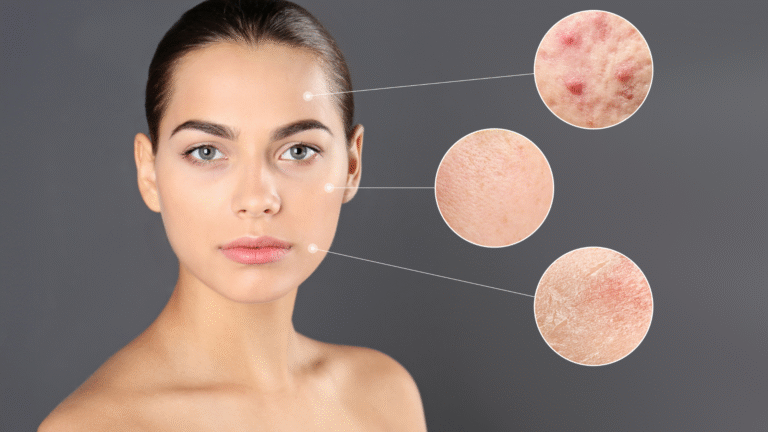
SKIN LONGEVITY & VITAMIN E: THE UNSUNG GUARDIAN OF SKIN HEALTH AND RADIANCE
“If skin longevity had a guardian angel, it would be Vitamin E — steady, protective, and quietly strengthening your skin against aging, every single day.”
Some skincare ingredients announce themselves loudly.
Vitamin E does not.
It works in the background — protecting, stabilizing, reinforcing — making sure everything else in your routine has the chance to do its job properly. And yet, despite being one of the most studied and biologically relevant antioxidants in human skin, Vitamin E is often misunderstood or underestimated.
At Metrin, we see Vitamin E differently.
Not as a trendy add-on.
Not as a single-ingredient solution.
But as a guardian of skin longevity — one that protects your skin and the nutrients that support it.
Why Vitamin E Matters for Skin Longevity
Vitamin E (tocopherols and tocopheryl esters) is the primary lipid-soluble antioxidant naturally found in human skin. That alone makes it essential.
But its real power lies in where it works and what it protects.
Vitamin E resides in the skin’s lipid barrier — the very place where aging begins when oxidative stress, UV exposure, pollution, and inflammation slowly weaken structure and resilience.
Here, Vitamin E helps:
- neutralize free radicals
- protect cell membranes from oxidation
- preserve barrier lipids
- reduce inflammation
- support smoother texture and elasticity
- slow the visible effects of environmental aging
This is not about instant results.
This is about keeping skin strong enough to age well.
Vitamin E Protects More Than Your Skin — It Protects Your Skincare
This is the part most skincare conversations miss.
Vitamin E doesn’t only protect skin cells.
It also protects other ingredients inside your skincare routine.
In well-designed formulations, Vitamin E functions as part of an antioxidant network, helping to stabilize and preserve:
- Vitamins A and C
- Amino acids
- Essential fatty acids (EFAs)
- Botanical extracts
Without adequate antioxidant protection, these ingredients can oxidize before they ever reach your skin — reducing effectiveness and, in some cases, increasing irritation.
Vitamin E acts as a sacrificial antioxidant, neutralizing oxidative stress so other nutrients remain intact and bioavailable.
This is why Vitamin E is foundational in longevity-focused skincare systems — not optional.
Natural Vitamin E vs. “Added Tocopherol”: Why Source Matters
Not all Vitamin E behaves the same way on skin.
Many products simply add a small amount of synthetic tocopherol for label appeal. While this can offer some benefit, it doesn’t compare to Vitamin E delivered through naturally Vitamin-E-rich botanical oils.
Sunflower Oil: A Natural Vitamin E Reservoir
Sunflower oil — especially certified organic, cold-pressed, high oleic sunflower oil — naturally contains abundant tocopherols that are:
- more readily absorbed
- lipid-compatible with the skin barrier
- delivered in a protective matrix that resists oxidation
When Vitamin E is embedded naturally within an oil, the skin recognizes it more easily and utilizes it more efficiently.
At Metrin, we combine:
- naturally occurring Vitamin E from sunflower oil
- added tocopheryl acetate (a stable, gentle, long-acting form of Vitamin E)
This dual-delivery approach provides both immediate antioxidant support and long-term stability — far more than formulas that simply “add Vitamin E” at the end.
Vitamin E, Essential Fatty Acids & Barrier Strength
Vitamin E and essential fatty acids work hand-in-hand.
EFAs replenish the skin’s lipid matrix.
Vitamin E protects those lipids from oxidation.
Together, they:
- strengthen the skin barrier
- reduce trans epidermal water loss (TEWL)
- improve softness and elasticity
- calm irritation and sensitivity
- support clearer, more balanced skin
This partnership is especially important for women experiencing dryness, sensitivity, hormonal changes, or visible signs of aging.
“My skin stopped feeling fragile. It feels resilient now — smoother, calmer, and healthier.” — Metrin customer, long-term user
Vitamin E, Acne & Skin Balance
Vitamin E also plays a role in supporting acne-prone and reactive skin.
By reducing lipid oxidation and calming inflammation, Vitamin E helps:
- stabilize sebum
- support a healthier barrier
- reduce inflammatory triggers that worsen breakouts
- support post-blemish recovery
When paired with linoleic-acid-rich sunflower oil, Vitamin E helps correct the lipid imbalances often seen in acne-prone skin — without clogging pores.
This is why Vitamin E, when properly formulated, is supportive rather than problematic for breakout-prone skin.
Vitamin E & Sun Exposure: Support, Not Replacement
Vitamin E is not sunscreen — but it plays an important supporting role in daily sun resilience.
Research shows Vitamin E:
- reduces UV-induced free radical damage
- helps limit lipid peroxidation caused by sun exposure
- supports collagen preservation over time
- calms post-sun inflammation
Botanical oils naturally disperse small amounts of UV light, and Vitamin E helps buffer the oxidative stress that follows sun exposure.
This makes Vitamin E particularly valuable in daily routines, where cumulative sun exposure — not sunburn — drives long-term skin aging.
Why Applying Metrin Under Sunscreen Makes Sense
Layering matters.
When the Metrin Skincare System is applied before sunscreen, it helps create an ideal foundation for sun protection:
- Vitamin E helps reduce photodegradation of sunscreen actives
- A lipid-replenished barrier allows sunscreen to spread more evenly
- Antioxidant support buffers oxidative stress triggered by UV exposure
This does not replace SPF — it supports sunscreen performance and skin recovery.
Best practice:
Apply your Metrin routine first.
Apply sunscreen as your final morning step.
Vitamin E Works Best in a System — Not Alone
Vitamin E is most effective when used consistently and in synergy.
In the Metrin Skincare System, Vitamin E works alongside:
- Essential fatty acids from sunflower oil
- Aloe vera and amino acids for hydration and repair
- Vitamins A and C for renewal and brightness
Layering increases:
- absorption
- bioavailability
- ingredient stability
- cumulative long-term benefits
This is why skin longevity is not about a single hero ingredient — it’s about ritual, structure, and balance.
What Vitamin E Does for Visible Skin Longevity
Over time, consistent Vitamin E support contributes to:
- smoother texture
- fewer fine lines
- improved elasticity
- calmer, less reactive skin
- brighter, more even tone
- stronger barrier function
- healthier response to environmental stress
These are the changes that don’t shout — but endure.
“I’ve used Metrin for decades. My skin doesn’t just look good — it behaves well.” — Metrin customer, 40+ years
Continue Your Skin Journey
Vitamin E is a team player. Its power multiplies when combined with other key nutrients for a comprehensive defense strategy.
- The Power Couple: Unlock the legendary skin benefits of combining it with Vitamin C. Read The Vitamin C & E Synergy for Skin.
- Delivered Naturally: See how Sunflower Oil delivers Vitamin E and essential lipids. Explore Sunflower Oil for Skin Longevity.
- Renewal & Repair: Pair antioxidant protection with gentle skin cell renewal in our guide to Retinyl Palmitate for Skin Longevity.
FAQ — Vitamin E & Skin Longevity
What does Vitamin E do for the skin?
Vitamin E is a lipid-soluble antioxidant that protects the skin barrier, reduces oxidative stress, supports elasticity, and helps maintain smooth, resilient skin over time.
Is Vitamin E good for aging skin?
Yes. Vitamin E helps protect collagen, reduce inflammation, and support barrier integrity — all critical factors in skin longevity and graceful aging.
Is natural Vitamin E better than added Vitamin E?
Vitamin E delivered naturally through botanical oils like sunflower oil is often more readily absorbed. When combined with stabilized tocopherol acetate, it provides both immediate and long-term antioxidant support.
Can Vitamin E help with acne-prone skin?
When properly formulated, Vitamin E helps calm inflammation, stabilize sebum, and support barrier repair — making it beneficial for many acne-prone skin types.
Should Vitamin E be used under sunscreen?
Yes. Antioxidants like Vitamin E help buffer oxidative stress and may reduce photodegradation of sunscreen ingredients. Apply sunscreen as the final step.
How does the Metrin Skincare System use Vitamin E?
The Metrin Skincare System — made in Canada and trusted by generations worldwide — delivers Vitamin E through both natural sunflower oil and stabilized forms, layered within a structured routine designed for long-term skin health.
Ready to restore your glow?
Start with the Metrin Skincare System for Her
Our complete 5-step system is designed for long-term results, not short-lived “glow-ups.”👉 Shop the Metrin Skincare System for Her


Take Our Skin Consultation Questionnaire
Discover your skin’s needs and get tailored guidance.💌 Take the FREE Skin Care Questionnaire and we’ll help you get started.
References
- Shindo, Y. et al. Vitamin E protects skin lipids from UV-induced peroxidation. Journal of Investigative Dermatology.
- Lin, F.H. et al. UV photoprotection by antioxidants vitamin C and vitamin E. Journal of the American Academy of Dermatology.
- Montenegro, L. Botanical oils as photoprotective agents. Cosmetics.
- Siger, A. et al. Tocopherol content and antioxidant activity in sunflower oils. European Journal of Lipid Science and Technology.
- Packer, L. et al. The antioxidant network of Vitamin E. Free Radical Biology & Medicine.
- Rawlings, A.V. Role of lipids in skin barrier function. Dermatologic Therapy.
#AcneCare #Breakouts #SunflowerSeedOil #NonComedogenic #SkinLongevity #AdultAcne #BalancedSkin #PoreCare #GlassSkin #EssentialFattyAcids #MetrinSkincare #DoubleCleansing