

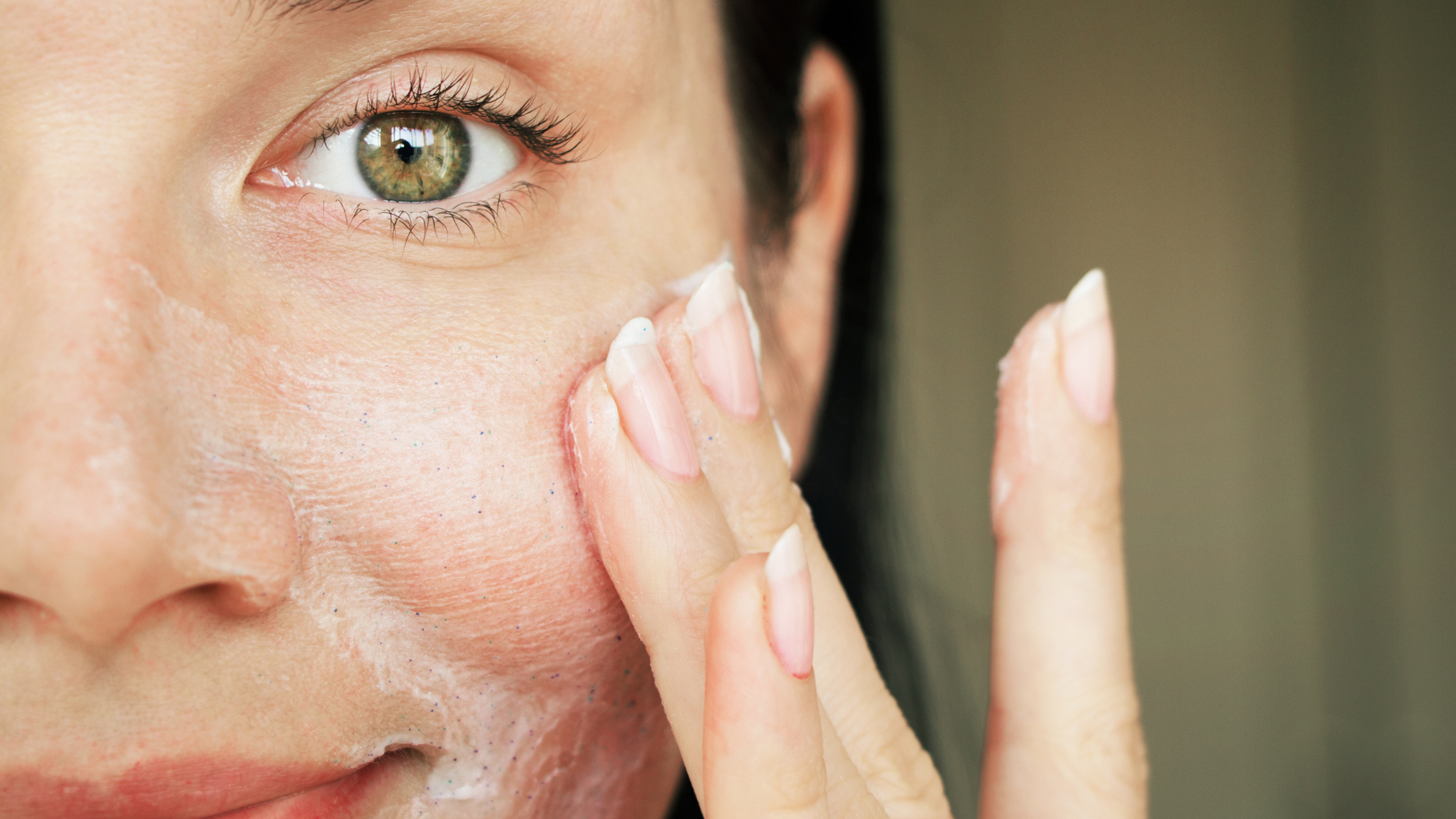
Why Sensitive Skin Is Often Over-Exfoliated Skin
And Why Doing Less Is Sometimes the First Step Toward Real Renewal
If your skin feels sensitive, reactive, tight, or unpredictable — you are not alone.
And you are not doing anything wrong.
Many women who describe their skin as “sensitive” are doing exactly what modern skincare advice recommends: exfoliating regularly, rotating actives, adding retinoids, trying to stay ahead of aging.
The uncomfortable truth?
Most sensitive skin today isn’t born sensitive — it’s over-exfoliated.
And when skin is already compromised, adding stronger products rarely solves the problem. It quietly intensifies it.
This is not a blog about stopping exfoliation forever.
It’s about understanding when skin needs repair before renewal.
Sensitive Skin Is Often a Skin State — Not a Skin Type
True genetic sensitivity exists. But far more common is acquired sensitivity — skin that has been pushed beyond its recovery capacity.
Signs include:
- Redness that flares and fades
- Stinging from products that “used to be fine”
- Tightness even when moisturized
- Breakouts and dryness at the same time
- Fear of trying anything new
This is not weak skin.
It’s overworked skin.
How Over-Exfoliation Happens (Even When You’re Careful)
Over-exfoliation is rarely dramatic. It’s cumulative.
Today’s routines quietly layer exfoliation from multiple angles:
- Acid toners + exfoliating cleansers
- Retinol combined with AHAs or BHAs
- “Daily glow” resurfacing products
- Mechanical cleansing devices
- Seasonal peels without recovery periods
Individually, none of these seem extreme.
Together, they can erode the stratum corneum, the outer barrier that keeps moisture in and irritation out.
When that barrier thins, skin becomes reactive.
What Actually Breaks Down When Skin Is Over-Exfoliated
Healthy skin renewal is rhythmic. Cells shed. New ones rise. Lipids rebuild.
Over-exfoliation disrupts this rhythm in three important ways:
1. The Lipid Barrier Thins
The skin barrier depends on a matrix of ceramides, cholesterol, and fatty acids. When exfoliation outpaces lipid repair, transepidermal water loss increases.
2. Micro-Inflammation Becomes Chronic
Low-grade inflammation — sometimes called inflammaging — doesn’t always look dramatic. It whispers: persistent redness, slower healing, uneven tone.
3. Recovery Signals Get Interrupted
Skin that is constantly “stimulated” never enters full repair mode. It remains in stress response.
This is why stronger products often stop working over time.
Not because your skin is aging faster — but because it is fatigued.
Why Gentler Skincare Can Feel Like It’s “Not Working”
When we’re conditioned to associate tingling or peeling with effectiveness, calm skin can feel underwhelming.
But barrier repair is quiet.
It feels like:
- Less redness
- Less reactivity
- Fewer flare-ups
- More comfort
This is why many women describe the Metrin Skincare System as gentle — and then, weeks later, realize their skin is clearer, calmer, and more resilient than it has been in years.
Not because exfoliation disappeared.
But because exfoliation returned to balance.
From Women Who Thought Their Skin Was “Just Sensitive”
“I thought I had sensitive skin for years. Everything stung. I avoided exfoliating because I was afraid. After going back to a consistent Metrin routine, my skin stopped reacting. It wasn’t sensitive — it was overworked.” — Karen L.
“Retinol made my skin peel and burn. I assumed that meant it was working. But I was constantly red. Switching to a gentler, consistent routine changed everything. My skin is calmer now than it was in my 30s.” — Darlene M., 30+ year Metrin user
These stories are common.
Most women don’t need more strength.
They need more stability.
The Over-Exfoliation Reset: What Skin Needs First
Before exfoliation can work properly, skin needs:
✔ Barrier integrity
✔ Hydration balance
✔ Predictable rhythm
This is why Metrin was built as a system — not a spotlight product.
Instead of forcing rapid turnover, it:
- Cleanses without abrasion
- Supports natural shedding without stripping
- Replenishes moisture daily
- Encourages renewal without triggering inflammation
When skin feels safe again, exfoliation becomes effective — not inflammatory.
Why This Matters for Retinol and Anti-Aging Actives
Over-exfoliated skin is often retinoid-intolerant skin.
When the barrier is compromised:
- Retinol stings
- Acids burn instead of brighten
- Anti-aging products accelerate irritation
Many women assume their skin “can’t handle” actives anymore.
In reality, the barrier simply hasn’t been given time to recover.
Frequently Asked Questions
Is sensitive skin always caused by over-exfoliation?
Not always. Some people have genetically reactive skin. But in many women over 30, new sensitivity develops after layering exfoliants, retinoids, and resurfacing treatments. When the barrier is restored, sensitivity often improves significantly.
How do I know if my skin barrier is damaged?
Common signs include persistent redness, stinging when applying products, tightness after cleansing, flaking combined with oiliness, and breakouts that don’t resolve. These can indicate impaired barrier function.
Should I stop exfoliating completely if my skin feels irritated?
Not necessarily forever. Often, reducing frequency and supporting barrier repair first allows exfoliation to become effective again. Skin renewal works best when the barrier is intact.
Can over-exfoliation make wrinkles look worse?
Yes. Chronic inflammation and increased water loss can temporarily exaggerate fine lines and texture. Supporting lipid balance and reducing irritation often softens their appearance.
What is the safest way to reset over-exfoliated skin?
Focus on gentle cleansing, hydration layering, sun protection, and consistency. Avoid stacking multiple actives. Allow skin several weeks to stabilize before reintroducing stronger treatments.
Ready for Personalised Guidance?
Start with the Metrin Skincare System for Her
Our complete 5-step system is designed for long-term results, not short-lived “glow-ups.”👉 Shop the Metrin Skincare System for Her


Take Our Skin Consultation Questionnaire
Discover your skin’s needs and get tailored guidance.💌 Take the FREE Skin Care Questionnaire and we’ll help you get started.
References
Bissett DL. Topical retinoids in skin aging: clinical efficacy and safety. American Journal of Clinical Dermatology. 2004.
Proksch E, Brandner JM, Jensen JM. The skin: an indispensable barrier. Experimental Dermatology. 2008;17(12):1063–1072.
Elias PM. Stratum corneum defensive functions: an integrated view. Journal of Investigative Dermatology. 2005;125(2):183–200.
Dreno B et al. The skin microbiome and its role in inflammatory skin disorders. Journal of the European Academy of Dermatology and Venereology. 2018.
Kang S et al. Inflammation and skin aging. Journal of Investigative Dermatology Symposium Proceedings. 2009.
#SensitiveSkin #OverExfoliation #SkinBarrierRepair #SkinLongevity #AntiAgingSkincare #MetrinSkincare #Inflammaging #WrinklePrevention #HealthySkin


